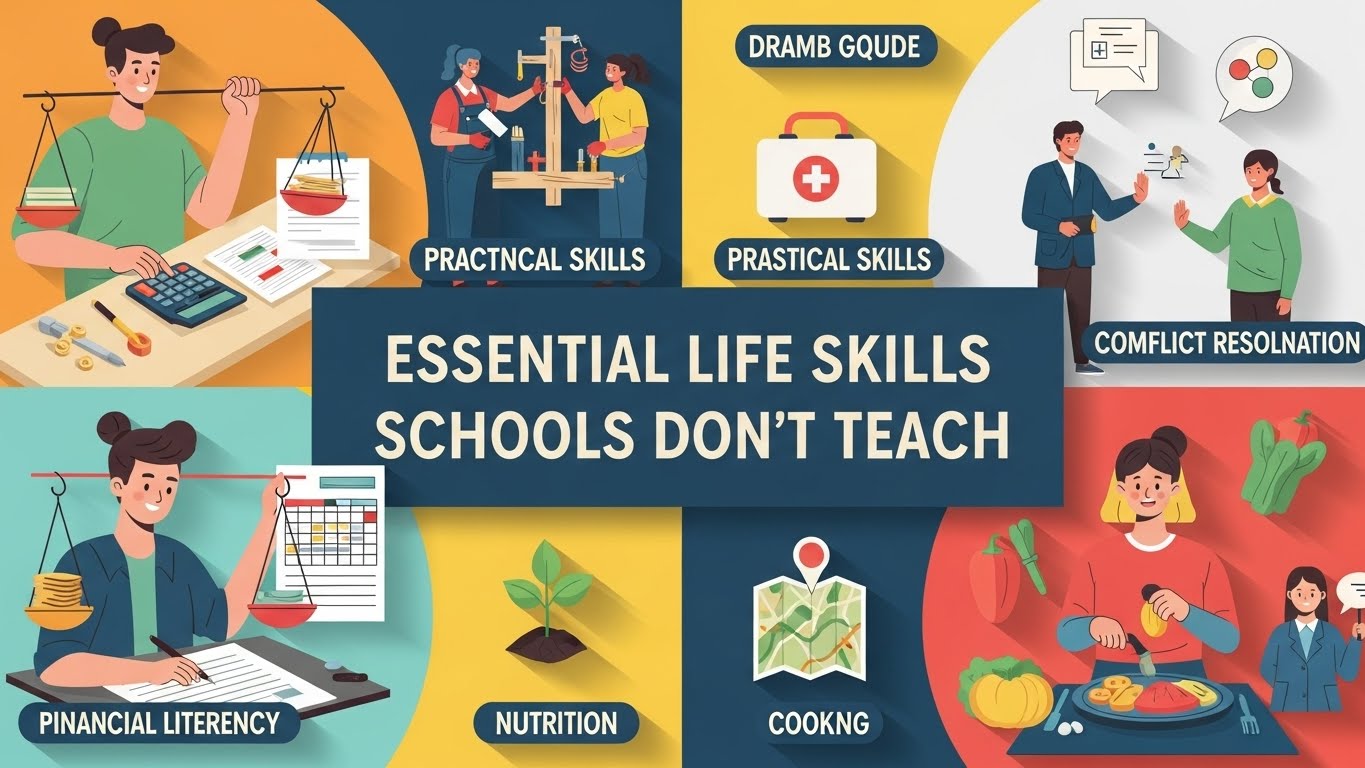
Academic education plays an important role in shaping careers, but many people enter adulthood unprepared for everyday responsibilities. This is where essential life skills become critical. These skills help individuals manage money, relationships, emotions, time, and challenges that appear in real-world situations. Unfortunately, many of these real life skills are not taught in schools, leaving people to learn through trial and error. Developing strong practical skills and following realistic adulting tips can make daily life smoother, more confident, and less stressful. This article explores the most important life skills that schools often overlook but are essential for independence, stability, and long-term success.
Financial Literacy as a Core Life Skill
One of the most important essential life skills missing from traditional education is financial literacy. Many adults struggle with budgeting, saving, debt management, and understanding financial products because they were never taught how money works. Financial mistakes can have long-lasting consequences, affecting mental health and life opportunities.
Learning basic money management helps individuals make informed decisions. This includes understanding income versus expenses, building emergency savings, and avoiding unnecessary debt. Practical knowledge about taxes, insurance, and interest rates empowers people to protect themselves financially. Financial literacy is not about becoming wealthy overnight, but about stability, planning, and peace of mind. These real life skills form the foundation for responsible and confident adulthood.
Communication and Emotional Intelligence
Strong communication and emotional awareness are critical practical skills that influence relationships, careers, and mental well-being. Schools often focus on academic communication but rarely teach how to express emotions, resolve conflicts, or listen empathetically. Emotional intelligence allows individuals to understand their own feelings and respond appropriately to others.
Healthy communication includes setting boundaries, giving constructive feedback, and handling disagreements respectfully. Emotional intelligence also helps manage stress, anger, and disappointment. People with these skills build stronger relationships and handle challenges more effectively. Developing emotional awareness improves self-control and confidence, making it easier to navigate both personal and professional environments.
Time Management and Self-Organization
Managing time effectively is one of the most valuable adulting tips for daily life. Without proper time management, responsibilities quickly become overwhelming. Many adults struggle to balance work, personal life, and self-care because they lack organizational skills.
Time management includes planning tasks, prioritizing responsibilities, and setting realistic schedules. Self-organization involves keeping personal spaces, digital files, and routines structured. These skills reduce stress and increase productivity. The table below highlights key life skills related to time and organization and their benefits:
| Life Skill | Description | Daily Benefit |
|---|---|---|
| Time Planning | Scheduling tasks and goals | Reduces overwhelm |
| Task Prioritization | Focusing on important activities | Improves productivity |
| Routine Building | Creating daily structure | Enhances consistency |
| Organization | Managing physical and digital spaces | Saves time |
| Goal Setting | Defining clear objectives | Improves motivation |
Mastering these skills allows individuals to take control of their days instead of constantly reacting to demands.
Problem Solving and Critical Thinking
Life is full of unexpected challenges, making problem solving a vital essential life skill. Schools often teach theoretical problem solving, but real-life situations require flexible thinking and emotional control. Critical thinking helps evaluate options, assess consequences, and make informed decisions.
Problem-solving skills include identifying the root of an issue, exploring possible solutions, and learning from outcomes. These skills are especially important in careers, finances, and relationships. People who can solve problems calmly are better equipped to handle pressure and uncertainty. Over time, these real life skills build resilience and confidence, reducing fear of failure.
Basic Health, Self-Care, and Well-Being
Taking care of physical and mental health is a responsibility that many people learn too late. Schools rarely teach how to manage stress, maintain healthy routines, or recognize burnout. Understanding nutrition, sleep, exercise, and mental health awareness is essential for long-term well-being.
Self-care is not indulgence; it is maintenance. Knowing when to rest, seek help, and set boundaries protects both physical and emotional health. Simple habits such as regular movement, balanced meals, and adequate sleep improve energy and focus. These practical skills support productivity and emotional stability throughout life.
Relationship Management and Social Skills
Building and maintaining healthy relationships is another area where essential life skills are often overlooked. Friendships, family bonds, and professional relationships require effort, communication, and respect. Social skills help individuals navigate differences, build trust, and handle conflict maturely.
Relationship management includes empathy, accountability, and compromise. It also involves recognizing unhealthy patterns and knowing when to distance oneself. Strong social skills improve teamwork, leadership, and emotional fulfillment. These adulting tips help individuals create supportive networks that enhance overall quality of life.
Adaptability and Lifelong Learning
The world is constantly changing, making adaptability a crucial life skill. Jobs evolve, technology advances, and personal circumstances shift. People who embrace lifelong learning adjust more easily to change and remain relevant in their careers and personal lives.
Adaptability includes learning new skills, accepting feedback, and staying open to growth. It also means letting go of outdated beliefs or habits that no longer serve you. This mindset encourages curiosity rather than fear. Among all real life skills, adaptability may be the most important for long-term success in an unpredictable world.
Final Thought
Learning essential life skills fills the gap between academic knowledge and real-world success. From financial literacy and emotional intelligence to time management and adaptability, these practical skills shape independence, confidence, and stability. While schools may not teach these lessons directly, they can be learned intentionally at any stage of life. By applying realistic adulting tips and focusing on continuous growth, individuals can navigate everyday challenges with clarity and confidence. Mastering these life skills is not about perfection but about preparedness, resilience, and building a life that works in the real world.