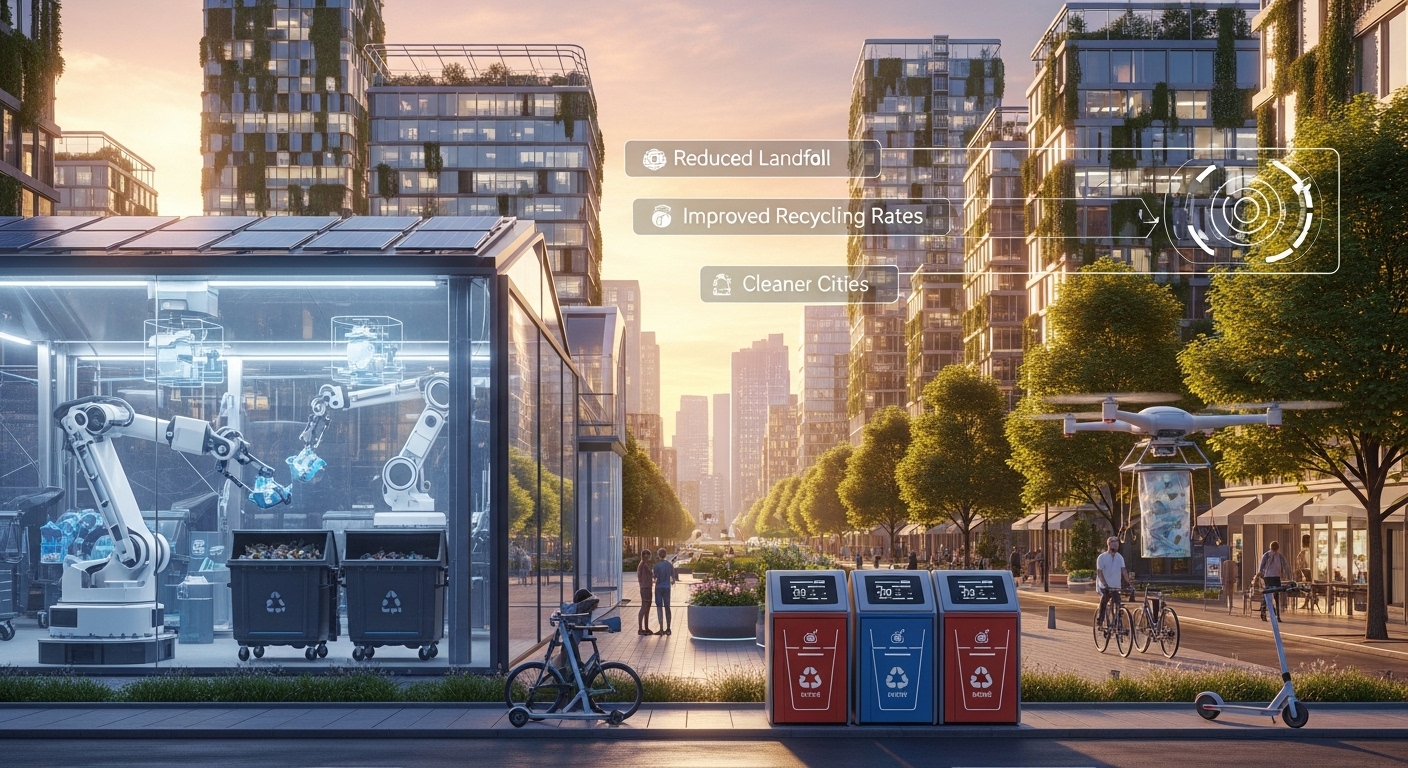
Smart waste management has emerged as a critical solution in addressing the growing environmental challenges faced by modern cities. Rapid urbanization, population growth, and increased consumption patterns have placed immense pressure on municipal waste systems. Traditional waste collection methods are often inefficient, costly, and environmentally damaging. By integrating advanced waste technology, cities are transforming how waste is collected, processed, and recycled. This shift is not only improving operational efficiency but also strengthening urban sustainability initiatives worldwide.
As cities strive to become greener and more resilient, smart waste management plays a central role in building green cities. The adoption of sensor-enabled bins, data analytics, and automated collection routes reduces fuel consumption and lowers carbon emissions. These advancements demonstrate how environmental innovation can support long-term development goals. By leveraging digital tools and intelligent infrastructure, municipalities are creating systems that align economic growth with ecological responsibility.
How Smart Waste Management Systems Work
Smart waste management relies on interconnected technologies designed to optimize waste collection and disposal processes. At the core of this system are smart bins equipped with sensors that monitor fill levels in real time. These sensors transmit data to centralized platforms, allowing municipal authorities to schedule collections only when necessary. This approach eliminates unnecessary trips and significantly reduces fuel usage.
Cities such as Singapore and Barcelona have implemented advanced waste technology solutions to enhance operational efficiency. In these urban environments, data-driven systems analyze waste generation patterns and adjust collection routes dynamically. Companies like IBM and Cisco contribute to environmental innovation by providing IoT platforms and analytics tools tailored for urban sustainability projects.
In addition to optimized collection, smart waste management systems incorporate automated sorting technologies at recycling facilities. Artificial intelligence-powered machines can identify recyclable materials with high precision, improving recovery rates and reducing landfill dependency. Such waste technology innovations help cities move closer to circular economy models, where resources are reused rather than discarded.
Benefits of Smart Waste Management for Green Cities
One of the primary benefits of smart waste management is improved efficiency. By collecting waste based on real-time data rather than fixed schedules, municipalities can significantly reduce operational costs. This efficiency contributes directly to urban sustainability goals by minimizing fuel consumption and greenhouse gas emissions. Reduced truck movements also alleviate traffic congestion, enhancing the overall quality of life in green cities.
Another important advantage is enhanced public health and cleanliness. Overflowing bins and irregular waste collection often lead to unsanitary conditions and pest infestations. Smart waste management ensures timely disposal, creating cleaner neighborhoods and safer public spaces. This proactive approach reflects the broader impact of environmental innovation in improving urban living standards.
Furthermore, data collected through waste technology systems provides valuable insights for policymakers. Authorities can identify high-waste areas, monitor recycling performance, and design targeted awareness campaigns. By aligning technological solutions with community engagement initiatives, cities can strengthen urban sustainability efforts and encourage responsible consumption patterns among residents.
Comparison Table: Traditional Waste Management vs Smart Waste Management
The table below illustrates the differences between traditional waste management systems and smart waste management solutions:
| Feature | Traditional Waste Management | Smart Waste Management |
|---|---|---|
| Collection Schedule | Fixed and routine-based | Data-driven and demand-based |
| Fuel Consumption | High due to unnecessary trips | Reduced through optimized routes |
| Environmental Impact | Higher emissions | Lower emissions supporting urban sustainability |
| Recycling Efficiency | Manual sorting with lower accuracy | Automated sorting using waste technology |
| Cost Efficiency | Higher operational expenses | Cost savings through smart monitoring |
| Data Utilization | Minimal data tracking | Real-time analytics enabling environmental innovation |
This comparison highlights how smart waste management provides measurable improvements in efficiency, sustainability, and environmental performance. By leveraging digital tools, cities can transition from reactive waste handling to proactive resource management.
Challenges and Implementation Considerations
Despite its advantages, implementing smart waste management systems involves certain challenges. Initial investment costs for installing sensors, data platforms, and automated sorting facilities can be substantial. Municipal budgets may face constraints, especially in developing regions. However, long-term cost savings and environmental benefits often outweigh the initial expenditures.
Data security and system maintenance are additional considerations. Since smart waste management relies on digital networks and IoT devices, ensuring cybersecurity is essential. Regular maintenance and technical support are required to keep waste technology systems functioning effectively. Partnerships with technology providers and continuous training for municipal staff are crucial for sustainable implementation.
Public awareness and participation also influence the success of urban sustainability initiatives. While environmental innovation provides the tools, community engagement ensures proper waste segregation and responsible disposal practices. Without citizen cooperation, even the most advanced systems may struggle to achieve optimal results. Therefore, education campaigns and transparent communication are vital components of green cities strategies.
The Future of Smart Waste Management and Sustainable Urban Development
The future of smart waste management is closely linked to advancements in artificial intelligence, robotics, and renewable energy integration. As cities continue to evolve, waste technology solutions will become more sophisticated and cost-effective. Predictive analytics may soon anticipate waste generation trends, enabling even more efficient resource allocation.
Environmental innovation will also expand beyond waste collection to include energy recovery from waste materials. Smart facilities capable of converting waste into renewable energy can further strengthen urban sustainability frameworks. Such initiatives contribute to the development of green cities that prioritize resource efficiency and environmental responsibility.
Moreover, collaboration between governments, private companies, and research institutions will accelerate progress. As global awareness of climate change intensifies, smart waste management will become an essential pillar of sustainable urban planning. By integrating technology, policy, and community engagement, cities can create resilient systems that balance economic growth with ecological preservation.
Final Thoughts
Smart waste management represents a transformative approach to addressing urban environmental challenges. Through advanced waste technology, data analytics, and environmental innovation, cities can significantly enhance urban sustainability outcomes. The development of green cities depends not only on infrastructure upgrades but also on intelligent systems that optimize resource use and minimize environmental impact.
While challenges such as funding and cybersecurity must be carefully managed, the long-term benefits of smart waste management are undeniable. By embracing technological progress and fostering community participation, municipalities can create cleaner, more efficient, and more sustainable urban environments. As global urbanization continues, smart waste management will remain a cornerstone of sustainable urban development strategies worldwide.