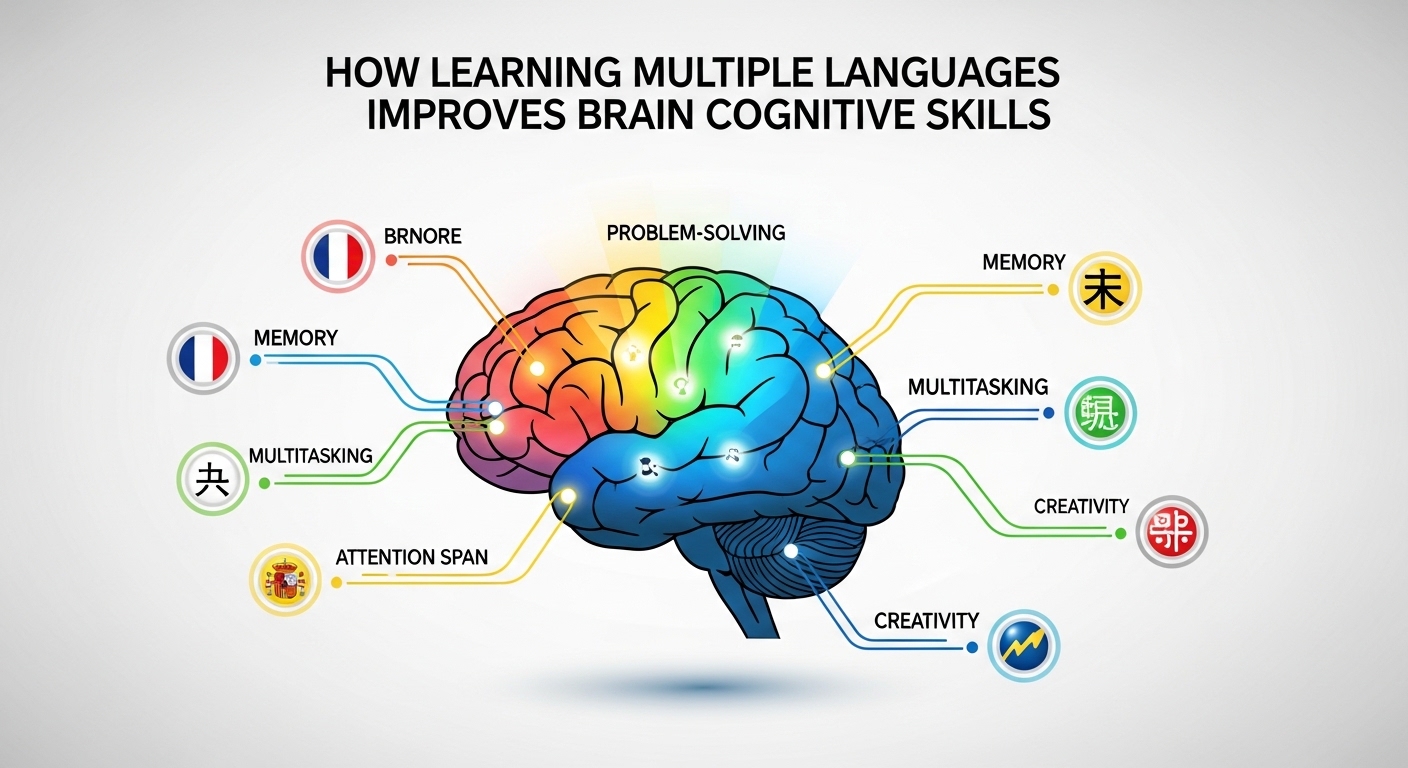
Language learning has long been recognized as one of the most effective ways to stimulate the human brain and enhance intellectual abilities. In an increasingly globalized world, learning multiple languages is becoming more valuable not only for communication but also for mental growth. Researchers and educators widely agree that multilingual skills contribute significantly to cognitive development, improving memory, concentration, and problem-solving abilities.
Learning a new language involves complex mental processes that engage various areas of the brain. When individuals study vocabulary, grammar, pronunciation, and sentence structure, they activate neural pathways responsible for memory and comprehension. This mental activity acts as a form of brain training that strengthens cognitive functions over time. As a result, language learning is increasingly considered an important educational activity that benefits individuals of all ages.
Beyond academic settings, multilingual skills are also useful in professional environments and international communication. However, the most fascinating advantage of language learning lies in its impact on brain health and cognitive performance. Individuals who regularly practice multiple languages often develop sharper thinking abilities and greater mental flexibility.
How Language Learning Enhances Cognitive Development
Cognitive development refers to the growth of mental abilities such as memory, reasoning, and decision-making. Language learning plays a significant role in strengthening these skills because it requires continuous mental engagement. When learners memorize vocabulary or interpret new sentence structures, they train the brain to process information more efficiently.
One important aspect of multilingual skills is improved memory capacity. Learning a language requires memorizing thousands of words and their meanings, which strengthens both short-term and long-term memory. This repeated mental exercise improves the brain’s ability to store and recall information.
Language learning also enhances problem-solving skills. When individuals encounter unfamiliar words or phrases, they must analyze context, grammar, and meaning to understand the message. This process encourages analytical thinking and strengthens cognitive flexibility.
Attention and concentration are also improved through language learning. Studying grammar rules or practicing conversation requires sustained focus, which gradually trains the brain to maintain attention for longer periods. These cognitive benefits contribute to overall intellectual growth and academic success.
Benefits of Multilingual Skills in Daily Life
Developing multilingual skills offers numerous practical advantages in addition to cognitive development. People who speak multiple languages often find it easier to connect with individuals from different cultures and backgrounds. This ability improves communication and fosters global understanding.
Another advantage of language learning is enhanced adaptability. Multilingual individuals can switch between languages depending on context, which strengthens mental flexibility. This cognitive skill helps people adapt quickly to new environments and challenges.
Multilingual skills also support professional growth. Many international companies prefer employees who can communicate with clients or colleagues in multiple languages. As global business expands, language proficiency becomes a valuable professional asset.
The following table highlights key benefits of multilingual skills and their cognitive impact.
| Multilingual Benefit | Description | Cognitive Advantage |
|---|---|---|
| Improved memory | Memorizing vocabulary and grammar | Stronger memory retention |
| Better problem solving | Interpreting unfamiliar language patterns | Analytical thinking |
| Enhanced focus | Concentrated language practice | Improved attention |
| Cultural awareness | Understanding different cultures | Broader perspectives |
| Communication skills | Conversing in multiple languages | Social intelligence |
These advantages demonstrate how language learning contributes to both intellectual and social development.
Language Learning as Brain Training
Language learning is often compared to brain training because it activates multiple cognitive functions simultaneously. Unlike passive activities, language study requires active engagement with listening, speaking, reading, and writing skills. Each of these activities stimulates different parts of the brain, creating a comprehensive mental workout.
Neuroscientists have found that bilingual or multilingual individuals often develop stronger neural connections in regions responsible for executive functions. These functions include decision-making, planning, and task management. By regularly practicing a second language, learners strengthen these neural networks.
Another fascinating aspect of language learning is its ability to delay cognitive decline. Studies suggest that people who speak multiple languages may experience slower onset of age-related memory disorders. The constant mental stimulation provided by multilingual communication helps maintain brain health over time.
Language learning also improves creativity. When individuals understand multiple linguistic structures, they become more capable of expressing ideas in different ways. This flexibility encourages creative thinking and innovative problem-solving.
Education Benefits of Learning Multiple Languages
Educational institutions around the world increasingly recognize the education benefits of multilingual learning. Many schools encourage students to learn second or even third languages as part of their academic curriculum. These programs help students develop global awareness and prepare them for international opportunities.
Language learning supports academic performance in other subjects as well. For example, studying grammar improves understanding of language structure, which enhances reading and writing skills. Learning new vocabulary also strengthens comprehension in subjects such as history, science, and literature.
In addition to academic advantages, multilingual education promotes cultural understanding. Students who learn foreign languages often gain insight into different traditions, customs, and perspectives. This awareness fosters empathy and open-mindedness.
Language learning also supports lifelong learning habits. Individuals who develop multilingual skills often continue exploring new languages and cultures throughout their lives. This curiosity contributes to ongoing intellectual growth and personal development.
Practical Strategies for Effective Language Learning
Achieving success in language learning requires consistent practice and effective study methods. One useful strategy is immersion, which involves surrounding oneself with the target language through conversation, media, and reading materials. Listening to music, watching films, or reading books in the new language helps learners become familiar with pronunciation and vocabulary.
Another effective approach is daily practice. Even short study sessions each day can significantly improve language skills over time. Language apps, flashcards, and online courses provide convenient tools for structured learning.
Speaking practice is particularly important for developing confidence and fluency. Conversing with native speakers or language partners helps learners apply their knowledge in real-life situations. This interaction strengthens communication skills and reinforces vocabulary.
Patience and persistence are also essential. Language learning is a gradual process that requires dedication and effort. By maintaining consistent practice and motivation, learners can gradually achieve proficiency and enjoy the cognitive benefits associated with multilingual skills.
Final Thought
Language learning is one of the most powerful tools for improving brain cognitive skills and supporting long-term intellectual growth. Through the development of multilingual skills, individuals enhance memory, concentration, and problem-solving abilities while gaining valuable education benefits. As a form of brain training that promotes cognitive development and cultural understanding, learning multiple languages continues to play an important role in personal and professional development.