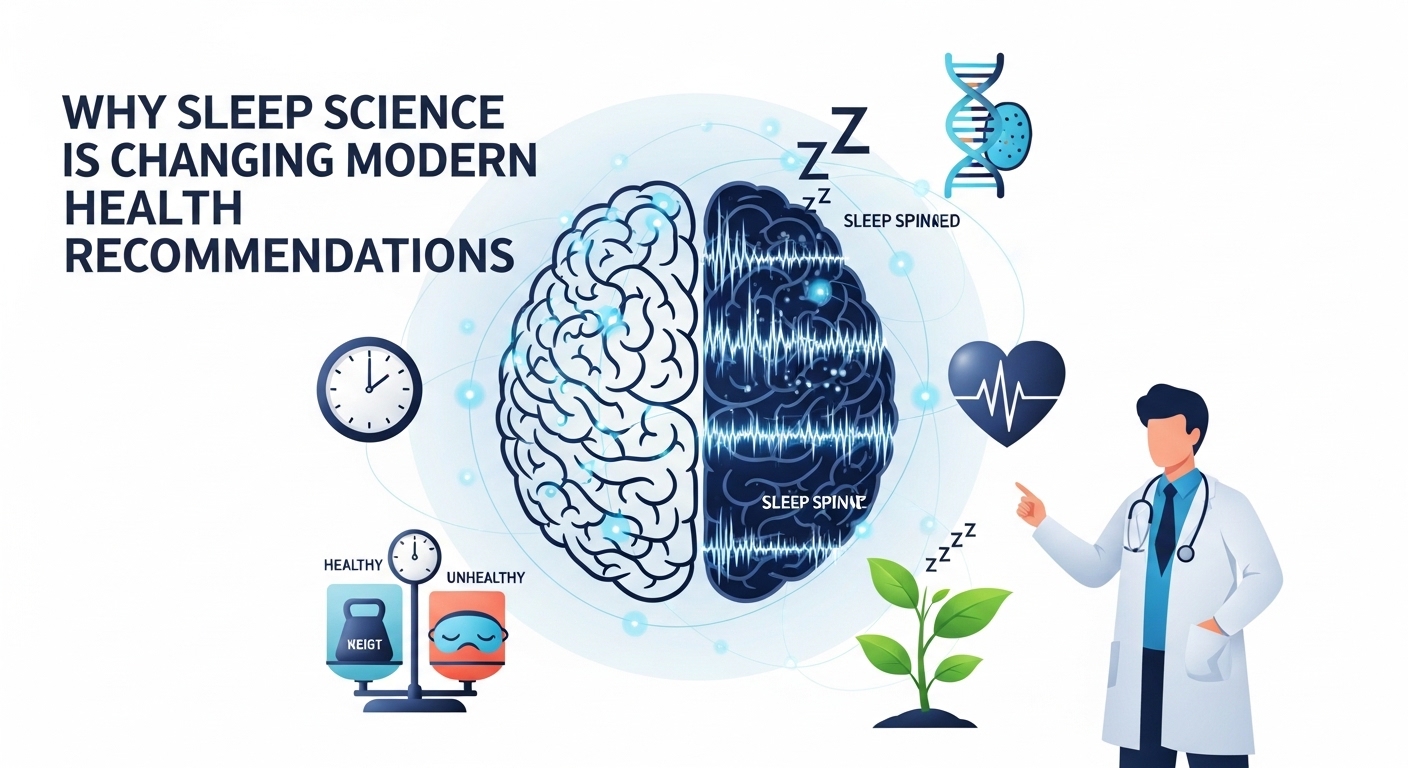
Sleep science has emerged as a critical field shaping modern health recommendations and lifestyle guidance. For decades, sleep was often viewed as a passive state or simply a period of rest between waking hours. However, advances in sleep research have revealed that sleep is an active biological process essential for physical recovery, cognitive function, emotional regulation, and long-term health optimization. As scientific understanding deepens, sleep is now recognized as one of the foundational pillars of health alongside nutrition and physical activity.
Growing awareness of sleep deprivation and its consequences has significantly influenced public health messaging. Modern lifestyles characterized by screen exposure, irregular schedules, and high stress have disrupted natural circadian rhythm patterns for many individuals. As a result, health organizations and medical professionals increasingly emphasize sleep duration, timing, and quality in preventive health recommendations. This shift reflects broader sleep trends in which individuals and institutions recognize sleep as a key determinant of well-being and performance.
Understanding Sleep Cycles and Circadian Rhythm
Sleep science centers on understanding how the body regulates sleep through biological clocks and neural processes. The circadian rhythm is the internal 24-hour cycle that controls sleep–wake patterns, hormone release, body temperature, and metabolic activity. This rhythm is influenced primarily by light exposure, which signals the brain to regulate melatonin production and alertness levels.
Sleep itself occurs in repeating cycles consisting of non-rapid eye movement and rapid eye movement stages. Each stage plays a distinct role in health optimization. Deep non-REM sleep supports physical recovery and immune function, while REM sleep contributes to memory consolidation and emotional processing. Disruption of these cycles can impair cognitive performance, mood stability, and metabolic regulation.
The table below summarizes key sleep stages and their primary physiological functions.
| Sleep Stage | Characteristics | Primary Functions |
|---|---|---|
| Light Sleep (N1/N2) | Transition into sleep | Relaxation and brain slowing |
| Deep Sleep (N3) | Slow brain waves | Physical restoration and immunity |
| REM Sleep | Dreaming and brain activity | Memory and emotional processing |
| Circadian Regulation | 24-hour timing cycle | Hormonal and metabolic balance |
Understanding these mechanisms has been central to sleep research and explains why consistent sleep patterns are crucial for overall health.
Impact of Sleep Science on Health Optimization
Modern sleep science has transformed how health optimization is approached across medicine and wellness fields. Research shows that insufficient or poor-quality sleep is linked to increased risk of cardiovascular disease, obesity, diabetes, depression, and cognitive decline. These findings have shifted health recommendations toward prioritizing sleep duration and quality as preventive measures.
Healthcare providers now assess sleep habits alongside diet and exercise during routine health evaluations. Sleep hygiene practices such as consistent bedtimes, reduced evening screen exposure, and controlled light environments are commonly recommended. These strategies aim to align behavior with natural circadian rhythm patterns to improve physiological regulation.
Athletic performance and recovery science also highlight the importance of sleep. Studies show that adequate sleep enhances muscle recovery, reaction time, and injury prevention. As a result, athletes and fitness professionals increasingly integrate sleep optimization into training programs. This trend illustrates how sleep science influences both clinical medicine and performance-oriented health practices.
Role of Technology and Emerging Sleep Trends
Technological innovation has significantly accelerated the growth of sleep science and public engagement with sleep health. Wearable devices and mobile applications now track sleep duration, stages, heart rate variability, and circadian rhythm alignment. These tools provide individuals with insights into their sleep patterns, encouraging behavioral adjustments and health optimization strategies.
Sleep trends also include the growing popularity of sleep-focused environments and products. Adjustable lighting systems, sound masking devices, and ergonomic bedding aim to support circadian alignment and comfort. Digital therapeutics designed for insomnia and sleep disorders are gaining clinical acceptance, demonstrating the integration of technology and sleep research.
However, technology also contributes to sleep disruption. Evening exposure to blue light from screens suppresses melatonin production and delays sleep onset. Sleep science therefore emphasizes balanced technology use and digital hygiene practices to protect circadian rhythm stability. This dual role of technology reflects the complexity of modern sleep trends and their impact on health recommendations.
Public Health and Medical Implications of Sleep Research
Sleep research has expanded beyond individual health to influence public health policy and workplace practices. Chronic sleep deprivation is now recognized as a societal issue affecting productivity, safety, and healthcare costs. Shift work, long working hours, and irregular schedules disrupt circadian rhythm alignment, increasing risks of metabolic and mental health disorders.
Public health organizations increasingly advocate for sleep education and awareness campaigns. Schools are evaluating later start times to align with adolescent circadian biology, while workplaces are exploring fatigue management programs. Transportation and healthcare industries emphasize sleep-related safety protocols to reduce accidents linked to fatigue.
Medical practice is also evolving in response to sleep science. Sleep disorders such as insomnia, sleep apnea, and circadian rhythm disorders are more widely diagnosed and treated. Sleep medicine has emerged as a specialized field integrating neurology, respiratory medicine, and behavioral therapy. These developments demonstrate how sleep science is reshaping modern health recommendations at both individual and societal levels.
Future Directions in Sleep Science and Health Recommendations
The future of sleep science is closely tied to advances in neuroscience, chronobiology, and digital health monitoring. Researchers are exploring genetic influences on circadian rhythm patterns and individual sleep needs, paving the way for personalized sleep recommendations. This approach recognizes that optimal sleep duration and timing may vary among individuals.
Artificial intelligence and large-scale sleep data analysis are expected to improve diagnosis and treatment of sleep disorders. Continuous monitoring technologies may enable early detection of health conditions linked to sleep disruption. As understanding deepens, sleep science will likely integrate more fully with preventive medicine and health optimization frameworks.
Global lifestyle changes and increasing awareness will continue to elevate sleep as a health priority. Education on sleep hygiene and circadian alignment may become standard components of health programs and clinical care. As sleep trends evolve, sleep science will remain central to shaping modern health recommendations.
Final Thought
Sleep science is transforming modern health recommendations by revealing the essential role of sleep in physical, cognitive, and emotional well-being. Through advances in sleep research, understanding of circadian rhythm regulation, and emerging sleep trends, health optimization strategies now place sleep alongside nutrition and exercise as a core pillar of health. As scientific insights and technology continue to advance, prioritizing healthy sleep will remain fundamental to improving individual and public health outcomes.